
Neighborhoods
Bronzeville Lakefront in 2026: What Is Actually Rising, and What Is Not
Three years after the groundbreaking, the Bronzeville Lakefront is mostly roads, utilities, and a green-space promise. The biotech and housing that were supposed to define it are still on paper, and 2026 is the year the city wants proof.
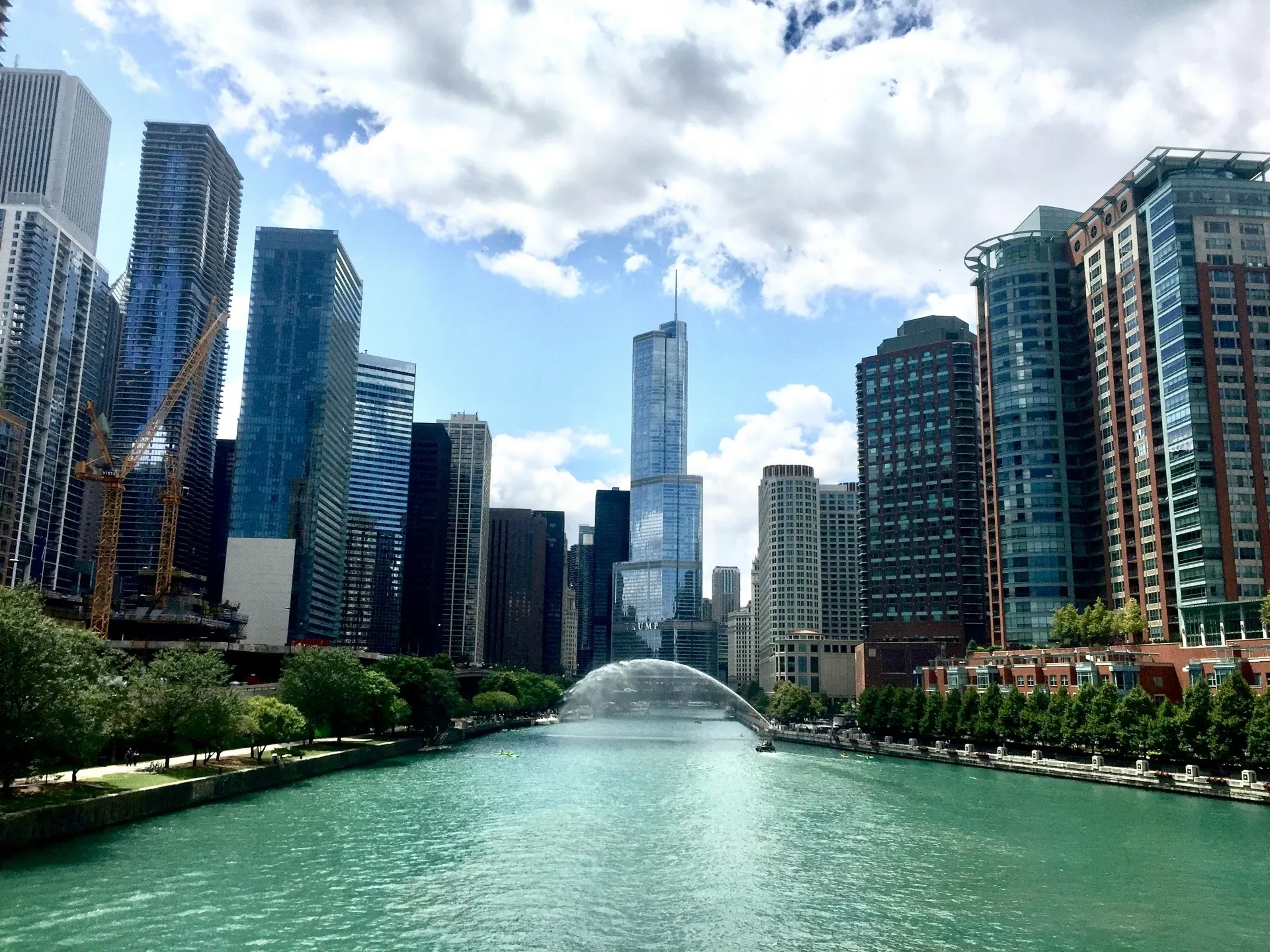
The 48.6-acre former Michael Reese Hospital site sits between Bronzeville and the lakefront, the canvas for one of Chicago's largest South Side redevelopments.
The take: infrastructure first, the actual neighborhood later
Let me be direct, because the rendering campaigns will not be. As of mid-2026, the Bronzeville Lakefront is a roughly $3.8 billion vision that has so far produced a construction site, not a neighborhood. The work that is actually happening on the 48.6-acre former Michael Reese Hospital grounds is infrastructure: a roughly $90 million package of new roadways, utilities, sidewalks, lighting, bike lanes, and landscaping, plus a public park. That is real and it matters. It is also not the part anyone was selling when this project was pitched as a South Side life-sciences and housing engine.
The headline numbers are genuinely big. The development team, a consortium called GRIT Chicago, talks about up to 7 million square feet of commercial, institutional, and mixed-income space and, on the city's side, up to 20,000 temporary and permanent jobs over a buildout that runs to roughly 2035. The project's own materials reach higher, citing figures like 75,000 jobs and an $8.2 billion economic impact across the full life of the development. Those are aspirations measured in decades. What you can stand on today is graded land and new streets.
So the honest question for anyone with money or a home riding on this is not 'how big is the vision.' It is 'what is actually getting built, and is the schedule holding.' On that score, 2026 is a year of reckoning rather than ribbon-cuttings. If you are weighing the South Side as an owner or investor, our overview of Chicago's South Side is a useful companion to this piece.
Why this site carries so much weight
To understand the stakes, you have to understand the ground. The former Michael Reese Hospital campus closed in 2008 and sat as a cleared, mostly vacant stretch of near-South-Side lakefront for more than a decade, a painful symbol of how long Chicago can let prime land lie fallow. It became a stand-in for a larger argument: that the South Side gets the plans and the press conferences while the North and West sides get the cranes. Lincoln Yards and The 78 advanced their narratives while Michael Reese stayed flat.
That history is why the Bronzeville Lakefront was never going to be judged like an ordinary development. It carried the freight of a promise, that a Black-led team would finally turn this site into something that built South Side wealth instead of extracting it. When a project is asked to settle a decades-long grievance, every quarter of delay reads as more than a schedule problem. It reads as the old pattern reasserting itself, and that is the lens through which a lot of Bronzeville watches the bulldozers.
It is also why the honest accounting in this piece is not a knock on the neighborhood. Bronzeville does not need a megaproject to be a good place to own, as our look at investing on the West and South Sides the right way lays out. The megaproject is a bet on top of an already-solid hand.
Who is building it, and what GRIT promised
The site was sold by the city to the development team in 2021 for about $96.9 million. The lead developer is Farpoint Development, working inside the GRIT Chicago group alongside Loop Capital Management, McLaurin Development Partners, Chicago Neighborhood Initiatives, and the Bronzeville Community Development Partnership. It is a team with significant Black ownership, and that was always part of the pitch: a major South Side redevelopment led, in part, by people from the South Side.
GRIT made real community commitments on paper. The plan calls for 20 percent of the housing to be affordable, targets for minority- and women-owned business participation in contracting, and a slice of retail reserved for local businesses at below-market rents. Those terms are why a lot of Bronzeville residents gave this project the benefit of the doubt instead of treating it as another outside land grab.
The catch is that commitments are promises about a future that has to actually arrive. None of the affordable units, the retail set-asides, or the local-hiring numbers mean anything until vertical construction happens. And vertical construction is exactly what has not started in earnest.
The ARC: a biotech anchor that is still mostly a plan
The centerpiece, the thing that made this more than another mixed-use development, is the ARC Innovation Center. Phase one was designed around it: roughly 13 acres and about 1.1 million square feet anchored by a 500,000-square-foot innovation building, with the lead tenant being a U.S. outpost of Israel's Sheba Medical Center, a hospital system known internationally for telemedicine, precision medicine, and digital health.
The promise here is specific and compelling: a health-equity-focused research hub on the South Side, the kind of anchor that creates skilled jobs and pulls in spin-off employers. Phase one also folds in housing, including around 200 senior units, with the 20 percent affordable commitment, plus the 31st Street Park as a new public space. The first phase carried a roughly $600 million price tag and was originally scheduled to be done by 2026.
That schedule has slipped. The original timeline had phase-one construction running 2021 to 2026; instead, infrastructure work did not break ground until March 2023, and the ARC building itself is not the finished, occupied anchor that early materials implied would exist by now. The vision is intact on paper. The biotech campus you could walk into is not yet here. For owners trying to read the tea leaves, this is the gap between a press release and a permit.
2026 is a deadline year, not a delivery year
Here is the development that actually defines 2026. Rather than cutting ribbons, the team faced a June 15, 2026 deadline to present the city with a revamped infrastructure plan. Without an acceptable plan, the underlying redevelopment agreement could be terminated, which would send a project a decade in the making back toward the drawing board. That is not the posture of a development hitting its marks. It is the posture of a project the city is trying to keep on the rails.
The financing puzzle is real. A significant share of the public commitment runs through an infrastructure agreement, and reporting has pegged the active infrastructure investment near $90 million, delivering more than nine acres of green space along with the streets and utilities. But the broader buildout depends on tenants, capital, and demand that have not fully materialized, which is why the conversation in 2026 has been about saving the agreement rather than scaling it up.
It is also why a separate megaproject keeps entering the story. The developer behind the long-stalled One Central proposal has been reported as exploring a role in the Michael Reese project, raising the possibility of linking two enormous, repeatedly delayed South Side and near-South developments. That could be a lifeline or a complication. We covered the broader pattern in whether Chicago megaprojects actually help nearby homeowners, and the short version is that adjacency to a stalled project is not the same as a windfall.
The Bears curveball, and what it reveals
If you want a single moment that captures the project's uncertainty, look at March 2025, when Farpoint released renderings pitching a roughly $3.2 billion Chicago Bears stadium on the very same Michael Reese site, complete with a 20-acre park bridge over DuSable Lake Shore Drive and a proposed $600 million in public money to ready the land. As Block Club Chicago reported, the Bears were not partners in that proposal; it was floated at the team. Team leadership had previously suggested the site was too narrow for its ambitions.
Read that carefully. The same acreage that was sold to the public as a life-sciences and housing district was, two years into construction, being marketed as a possible football stadium. A development confident in its original plan does not pivot to pitching an NFL dome on top of it. The stadium idea did not displace the existing plan, but it told you something about how fluid the site's future still is, and how hard financing has been to lock down.
For a South Side owner, the lesson is not cynicism, it is discipline. Treat the megaproject as optionality, not as a number you can bank. The neighborhood's real value rests on what is already there, not on which mega-vision wins the funding race this year.
What it means for South Side owners and nearby neighborhoods
Bronzeville and the surrounding South Side neighborhoods have fundamentals that exist with or without a megaproject: historic greystones and brick two-flats, lakefront proximity, strong transit, and a cultural legacy that keeps the area on every list of South Side appreciation stories. Those bones are the reason to pay attention here, and they are not contingent on a single development's success.
If the Bronzeville Lakefront eventually delivers even a meaningful fraction of its plan, jobs and amenities would land on top of that base, and nearby owners would benefit. But 'eventually' and 'fraction' are doing a lot of work in that sentence. Megaprojects move slowly, stall often, and rarely arrive on the brochure's schedule. The right way to underwrite your home or your investment is on today's comparable sales and condition, with the lakefront plan as upside you do not pay for in advance.
Practically, that means owners should separate the two stories cleanly. Your equity today is set by the market around you, not by a 2035 vision. If you are weighing a move, our sellers resources and the broader Chicago areas guides can help you anchor to real numbers. And if you want a concrete read rather than a guess, you can get a cash offer on your specific property and decide with the near-term figure in hand.
There is a quieter risk worth naming, too. Big, slow projects can freeze the blocks around them. Some owners hold for years waiting on a payoff that keeps sliding to the right, while their building ages and their carrying costs climb. If your plan to sell is really a plan to wait for the ARC to open, be honest that you are speculating on a timeline no one controls. For an owner who needs to move now, a megaproject two streets over is not a reason to delay a sale and it is rarely a reason to overprice one. Bronzeville buyers are pricing the home in front of them, not a press release.
The opposite mistake is just as costly: assuming the South Side will always be cheap and selling into the floor out of habit. Bronzeville's housing stock, its proximity to the lake and the Loop, and its transit access are exactly the fundamentals that have driven a decade of attention to the area. If you own one of its greystones or two-flats, you are holding something with real, independent demand. The job is to value it on that demand, in today's dollars, and let the megaproject be whatever it turns out to be.
- What is real now: roughly $90 million of infrastructure, more than nine acres of green space, new streets and utilities, groundbreaking March 2023.
- What is still on paper: the ARC biotech anchor as a finished, occupied building, the affordable housing units, the retail set-asides, the jobs.
- What 2026 is really about: a June 15, 2026 city deadline for a revamped infrastructure plan, with the agreement at risk if it is not met.
- How to act: price your home on current comps, treat the megaproject as optional upside, not a guarantee.
Sources
- City of Chicago, Department of Planning and Development, Bronzeville Lakefront (former Michael Reese Hospital site)
- Farpoint Development, Bronzeville Lakefront project page
- Bronzeville Lakefront, Phase One (ARC Innovation Center, housing, 31st Street Park)
- Block Club Chicago, Would Bears Bite On Michael Reese Stadium? Developers Pitch South Side Lakefront Site (March 14, 2025)
- Urban Land Magazine (ULI), How Chicago and the GRIT Development Team Envision the Mixed-Use Redevelopment
Common questions
What is actually built at the Bronzeville Lakefront as of 2026?
Mostly infrastructure. A roughly $90 million package of new roadways, utilities, sidewalks, lighting, bike lanes, and landscaping, plus a public park with more than nine acres of green space across the site. Infrastructure work broke ground in March 2023. The marquee ARC Innovation Center and the housing remain largely planned rather than finished and occupied.
What is the ARC Innovation Center?
It is the planned biotech and health-innovation anchor of phase one, a roughly 500,000-square-foot building with Israel's Sheba Medical Center as the lead tenant, focused on health equity and digital medicine. Phase one was originally scheduled to finish around 2026 but has slipped.
Who is developing the Bronzeville Lakefront?
A team called GRIT Chicago, led by Farpoint Development and including Loop Capital Management, McLaurin Development Partners, Chicago Neighborhood Initiatives, and the Bronzeville Community Development Partnership. The city sold the 48.6-acre former Michael Reese Hospital site to the team in 2021 for about $96.9 million.
Why does 2026 matter for this project?
Rather than a delivery milestone, 2026 brought a June 15 deadline for the development team to present the city a revamped infrastructure plan. Without an acceptable plan, the redevelopment agreement could be terminated, which would jeopardize the project's momentum.
Will the Bronzeville Lakefront raise my home's value?
Treat it as potential long-term upside, not a guarantee. The project has faced years of delays and financing questions, and a Bears stadium was even floated on the same site in 2025. Your home's value today rests on current comparable sales and condition, not on a 2035 vision.
Is the South Side a good place to own right now?
The case rests on fundamentals that do not depend on the megaproject: historic housing stock, lakefront and downtown proximity, and strong transit. The Bronzeville Lakefront is upside on top of that base, not the foundation of it.
Own near the Bronzeville Lakefront?
Megaproject timelines are out of your hands, but your home's value is something you can actually measure today. Our team can give you a current, no-pressure read on what your South Side greystone, two-flat, or single-family would bring in this market.
Get your cash offerThis page is general information and market commentary, not legal, tax, or investment advice. Programs and figures change; confirm at the source. Image is illustrative.