
The short answer
You can sell a house with a mechanics lien in Illinois, but the lien has to be paid, settled, bonded, escrowed, or defeated before the title company will insure the buyer's title. Most sales handle the lien at the closing table, where the title company pays the contractor out of the seller's proceeds and records a release. A cash buyer who understands lien files can usually move faster than a financed buyer, because no lender has to approve the title exceptions along the way.
A contractor dispute usually starts small: a renovation stalls, the workmanship disappoints, a payment gets withheld. Then a document called a mechanics lien lands on the title to your home, and a private argument becomes a public record that follows the property. Homeowners in Chicago and across Illinois often discover the lien only when they try to sell or refinance, sometimes months after the contractor walked off the job.
This guide explains what a mechanics lien actually does to a sale, the deadlines that control how long the lien can threaten your title, the five practical ways Illinois owners clear liens before or at closing, and when a direct cash sale is the cleanest exit. It draws on the Illinois Mechanics Lien Act as summarized by construction-payment and law firm resources, including Levelset's Illinois lien law FAQs, Illinois Legal Aid Online, and O'Flaherty Law. Lien law is technical, deadlines are unforgiving in both directions, and this is general information, so have a real estate attorney review your specific lien before you act.
Can I sell my house if a contractor put a lien on it
Yes, a recorded mechanics lien does not legally forbid a sale, but it freezes the normal sale process until someone deals with it. A mechanics lien is a security interest that contractors, subcontractors, and material suppliers can record against a property when they claim they were not paid for work that improved it. Once recorded, it attaches to the title, not just to the owner, which is why it cannot simply be ignored or outrun by a closing date.
The practical chokepoint is title insurance. When a buyer's title company searches the property, the lien appears as an exception on the title commitment, and no title insurer will cover a buyer or a buyer's lender against a known recorded lien. Mortgage lenders will not fund against uninsured title, so a financed sale stops cold. As a Chicago-focused legal explainer puts it, a recorded mechanics lien can freeze a sale or refinance until it is resolved. The freeze is real, but it is also solvable: every route in this guide ends with a closing, and the question is only which route costs the least time and money. If the property carries other recorded debts too, start with our broader guide to selling a house with liens in Chicago.
How long does a contractor have to file a lien in Illinois
According to law firm summaries of the Illinois Mechanics Lien Act, a contractor generally must record the lien within four months of the last date of work to enforce it against third parties such as buyers and lenders, and within two years of the last work to enforce it against the original owner. Levelset's Illinois FAQs and O'Flaherty Law's guide to perfecting a mechanics lien both walk through these windows, and both stress that the lien must also be enforced through a foreclosure lawsuit within two years of the work's completion or it expires.
Those timelines cut both ways for a seller. A lien recorded more than four months after the last work may be weak against your buyer, and a lien the contractor never sues on within two years eventually dies on the record. Illinois law also gives owners a pressure tool: a written demand that forces the claimant to file suit within 30 days or forfeit the lien, which an attorney can serve when a contractor records a lien and then sits on it. But none of this is self-executing. Counting the four-month window requires knowing the true last day of work, which is often disputed, and an expired lien may still need a court order or a release to come off the title cleanly. Treat the deadlines as leverage to be confirmed by a real estate attorney, not as a reason to ignore the lien.
How do I remove a mechanics lien in Illinois before selling
There are five practical ways to clear a mechanics lien from an Illinois title, and the right one depends on whether the debt is legitimate, how big it is relative to your equity, and how fast you need to close:
- Pay it in full. When the contractor genuinely finished the work and the number is right, paying the claim in exchange for a recorded release is the fastest and cheapest path. Get the release in recordable form before the money moves.
- Settle and record a release. Most lien disputes resolve at a discount, especially when the workmanship was poor or the lien amount is padded. The settlement agreement should require the claimant to sign a final satisfaction and release of lien that can be recorded immediately.
- Bond over the lien. Illinois law allows an eligible party to substitute a surety bond for the lien in certain cases, which moves the fight off the title and onto the bond, as Levelset describes. This is an option rather than a guarantee: eligibility rules, bond sizing above the lien amount, and court procedure all apply, and not every file qualifies, so attorney review is essential here.
- Escrow a holdback at closing. When the parties cannot agree before the closing date, the title company can hold an agreed amount of the seller's proceeds in escrow to cover the disputed lien, letting the sale close while the argument continues afterward.
- Challenge it in court. Liens with missed deadlines, inflated amounts, or defective paperwork can be attacked, and Illinois Legal Aid Online notes that owners have defenses when the work was defective or the lien was improper. Litigation is the slowest route, so it usually makes sense only when the lien is large and clearly wrong.
One caution on payment: when subcontractors are involved, paying the general contractor does not always protect you, which is why Illinois practice leans on sworn statements and lien waivers during a project. If the project itself was never finished, our guide to selling a house with unfinished renovations in Chicago covers how buyers price half-done work, and if permits were skipped along the way, see selling a house with unpermitted work in Chicago, because lien and permit problems often travel together.
What is a final satisfaction and release of lien
A final satisfaction and release of lien is the recordable document in which the lien claimant states that the claim is satisfied and the lien is released, and recording it is what actually clears your title. Paying the contractor without obtaining and recording a release leaves the lien sitting on the public record, where it will resurface in the buyer's title search even though the debt is gone. The release should identify the property, reference the recorded lien document number, be signed and notarized by the claimant, and be recorded with the recorder of deeds for the county where the property sits, which for Chicago properties means the Cook County Clerk's recording division.
In a sale, the title company normally manages this exchange so neither side has to trust the other: the contractor delivers the signed release into escrow, the closer pays the agreed amount out of the seller's proceeds, and the release records along with the deed. Sellers negotiating directly with a contractor before listing should insist on the recordable release at the moment of payment, not a promise to sign one later, and should confirm the recording afterward through the county's online records.
What happens to a lien at closing in Chicago
At a Chicago-area closing, a mechanics lien is handled like any other payoff item: the title company lists it as an exception, collects a payoff or settlement letter from the claimant, disburses the agreed amount from the seller's proceeds, and records the release so the buyer takes insurable title. The seller does not need cash in hand to clear the lien; the equity in the home does the work. This is the standard mechanics lien sale structure, and it is why a lien, by itself, rarely kills a deal where the seller has meaningful equity.
The structure gets harder when the numbers are contested or the equity is thin. A claimant who refuses to provide a payoff, a lien that exceeds the seller's equity, or a buyer's lender that refuses to close around an escrow can each stall the file. Those are the situations where the sequencing matters: settle or escrow first, then close, or find a buyer who does not need a lender's sign-off at all.
Can I sell a house with a lien to a cash buyer
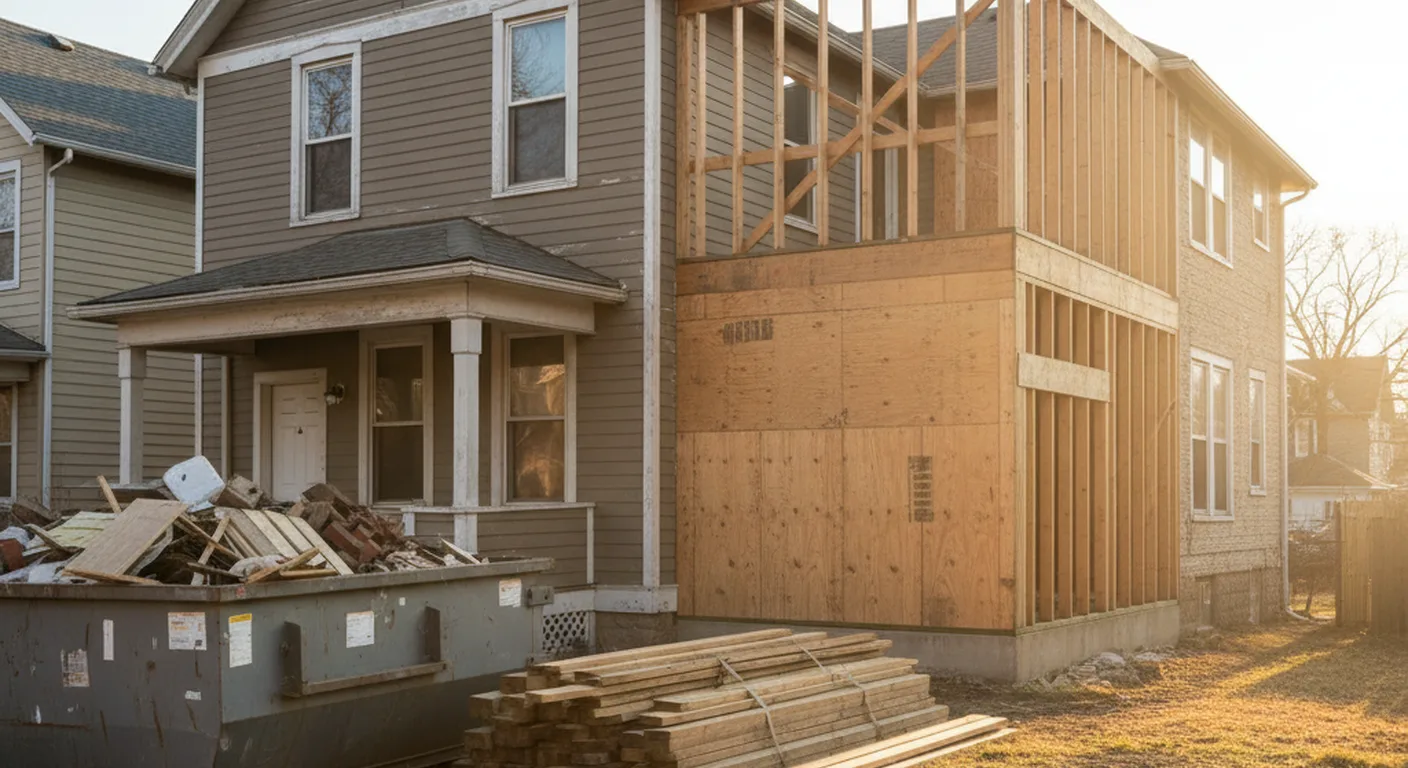
Yes, and when the lien is contested or the timeline is short, a cash buyer is often the cleanest exit. A cash purchase removes the mortgage lender from the equation, which means no underwriting objections to title exceptions, no appraisal contingency on a house with torn-up bathrooms, and no risk that the deal dies three days before closing because a lender's attorney did not like the escrow agreement. An experienced cash buyer prices the lien into the offer, works with the title company on the payoff or holdback, and closes on a schedule the seller controls.
That speed has the most value in a few recurring situations: the renovation is unfinished and the house will not appraise, the contractor is hostile and slow-moving, the seller is also behind on taxes or other debts, or the seller simply wants the dispute to end. If the property also carries municipal debts such as water bills or code-enforcement fines, read our guide to municipal liens in a Chicago property sale, because city claims follow different rules than contractor claims. When we review a lien file, we look at the recorded lien, the contract and payment history, the condition of the work, and the rest of the title, then make an as-is offer that already accounts for clearing the lien at closing. The seller signs once, the title company handles the money, and the lien stops being the seller's problem.
Frequently Asked Questions
Can I sell my house if a contractor put a lien on it?
Yes, but the lien must be dealt with before or at closing. A recorded mechanics lien shows up as a title exception, so the title company will require it to be paid, settled and released, bonded over, escrowed, or resolved in court before it will insure clear title. Cash buyers who know lien files can often close with the lien handled out of the sale proceeds at the closing table.
How do I remove a mechanics lien in Illinois before selling?
The five practical routes are paying the contractor in full, negotiating a discounted settlement in exchange for a recorded release, substituting a surety bond for the lien where eligible, escrowing disputed funds from the sale proceeds, and challenging a defective or inflated lien in court. The right route depends on whether the debt is legitimate, the timelines involved, and how fast the sale needs to close, so review options with a real estate attorney.
What is a final satisfaction and release of lien?
It is the recordable document a lien claimant signs confirming the lien is satisfied, which is then recorded with the county recorder, in Cook County the Clerk's recording division, to clear the title. At closing, the title company typically pays the contractor from the seller's proceeds and records the release as part of the transaction, so the buyer takes title free of the lien.
How long does a contractor have to file a lien in Illinois?
Law firm guides on the Illinois Mechanics Lien Act explain that a contractor generally must record the lien within four months of the last work to enforce it against third parties such as buyers and lenders, and within two years against the owner, and must file a foreclosure suit within two years of completing the work. Deadlines are technical and fact-specific, so have a real estate attorney confirm how they apply to your lien.
Can I sell a house with a lien to a cash buyer?
Yes. A cash buyer does not need a mortgage lender's approval, so the sale can be structured for the title company to pay or escrow the lien from proceeds at closing while the seller walks away done. This is often the fastest route when the seller does not have cash to clear the lien before listing or does not want to spend months litigating it.
What happens to a lien at closing in Chicago?
The title company lists the recorded lien as an exception on the title commitment, obtains a payoff or settlement figure from the lien claimant, pays it from the seller's proceeds at closing, and records a final satisfaction and release. If the amount is disputed, the parties can escrow an agreed amount and let the dispute resolve after closing while the buyer still takes insurable title.
Get a direct review of a property with a contractor lien
Send the address, the recorded lien, the contract and payment history with the contractor, and photos of the work. We will review the payoff posture and tell you whether a direct as-is sale can absorb the lien at closing.