Sell Chicago Properties is investor-led and works with licensed Realtors, attorneys, title professionals, and real estate advisors where a transaction requires it. A significant portion of Sell Chicago Properties inventory comes from tax-distressed properties in Will County and Cook County - homes where the owner fell behind on property taxes, a tax certificate was sold at the county's annual tax sale, and the redemption clock is now running. The team explains this process plainly and directly. Here is what you actually need to know.
The Illinois tax-sale ecosystem: how it works under the statute
Illinois has one of the most complex property-tax-sale systems in the United States. The governing statute is the Illinois Property Tax Code, 35 ILCS 200, specifically Articles 21 and 22, which govern the annual tax sale and the tax deed process respectively. Understanding those two articles is the foundation for everything else in this guide.
How to use this guide
Use this guide when taxes, liens, payoff letters, title exceptions, bankruptcy or court records could control whether a closing works.
- Property address, PIN if available, county, occupancy status, and target timeline
- Photos or video of condition issues, access limitations, utilities, and visible repairs
- Mortgage payoff, tax balance, liens, code notices, court papers, or title documents already in hand
- Preferred next step: direct offer review, call, listing comparison, or document-driven feasibility review
Fast review matrix
| Decision point | What to review | Why it matters |
|---|---|---|
| Value and repair burden | Current condition, likely repair scope, access, photos, and buyer financing limits | The real offer depends on risk after closing, not only comparable sales |
| Title and payoff | Mortgage, taxes, liens, court papers, owner authority, and municipal balances | A closing can only work if payoff and signing authority are sequenced |
| Timing and occupancy | Move-out needs, tenants, vacant status, sale dates, notices, and access | Timeline can change which path is realistic: direct sale, listing, or professional review |
The process works in stages. When a property owner fails to pay their property taxes, the county treasurer publishes the delinquency. At the annual tax sale - conducted by the county clerk and open to competitive bidding - the right to the delinquent taxes is sold to a third party (the tax buyer) in exchange for payment of the outstanding taxes plus interest. The tax buyer receives a tax certificate, not the property itself. The property owner still owns the home. What they now have is a deadline.
"A tax certificate is not a deed. The property owner still owns their home. What they have lost is time - and that is precisely what creates the motivated-seller dynamic that makes these deals work for cash buyers."
The tax certificate: what it is and what it is not
A tax certificate purchased at the annual tax sale under 35 ILCS 200, Article 21 gives the tax buyer the right to:
- Receive interest on the delinquent taxes (at a rate determined by competitive bidding at the sale)
- Initiate tax deed proceedings if the owner does not redeem within the statutory period
- Acquire fee title to the property through a court-ordered tax deed if the redemption period expires without payment
What the tax certificate does NOT give the buyer:
- The right to enter the property or take possession
- The ability to sell or encumber the property (that right stays with the original owner)
- Fee simple title to the property (that only comes after the tax deed is issued by the court)
Tax certificate vs tax deed: the critical distinction
Tax Certificate
A lien on the property
Purchased at the county's annual tax sale. The certificate holder is owed the delinquent taxes plus accruing interest. The property owner still has the right to redeem - pay off the certificate - and retain their home. The certificate can be assigned or sold by the certificate holder. Most distressed-tax sellers who contact investors are in the certificate phase, with the redemption clock running.
- Title remains with original owner
- Owner retains right of possession
- Redemption possible (pays off certificate)
- Deed does not automatically transfer
Tax Deed
Transfer of title through court order
If tax-sale or tax-deed papers are involved, the file needs document-level review. A buyer should evaluate the PIN, county records, tax years, notices, title posture, occupancy, condition, and closing path with independent professionals before pricing the transaction.
- Transfers title by court order
- Original owner loses property entirely
- Process takes 6-18+ months
- Certificate holder bears litigation risk
Redemption periods and clock pressure
The redemption period - the time the property owner has to pay off the tax certificate and retain their property - is the most important variable in any tax-distressed property transaction. In Illinois, redemption periods vary based on the property type and the county, but the general framework under 35 ILCS 200, Art. 21 is:
- Standard residential / farm property Two years from the date of the tax sale to redeem (pay off the certificate)
- Non-homestead property (commercial, vacant, etc.) 6 months to 1 year from the tax sale date, depending on classification
- Certificates redeemed Owner pays the delinquent taxes plus penalty interest (often 12%-36% annualized) plus any subsequent taxes paid by the certificate holder. Certificate is canceled and title is clear.
- Certificates NOT redeemed - petition phase Certificate holder files a petition for tax deed in circuit court. Notice to owner required under 35 ILCS 200, Section 22-10 and 22-15. Owner has a final opportunity to redeem before the court issues the deed.
The clock pressure is real and operates in both directions. The property owner faces losing their home if they do not redeem. The certificate holder faces a lengthy and expensive court process - with uncertain outcome - if they push all the way to tax deed. Both sides are incentivized to reach an agreement before the petition phase.
This is why cash buyers who understand the tax-sale system can access motivated sellers that the general market never sees. A property owner who knows their redemption deadline is approaching and who cannot raise the funds to redeem has two choices: let the certificate holder take the property through a court process (which may still leave them with nothing), or agree to a direct sale to a cash buyer who will pay off the certificate at closing and put real cash in the seller's pocket on a fast timeline.
For Will County specifically, the Will County Supervisor of Assessments publishes public records on assessed values and tax status. For Cook County transactions, the Cook County Treasurer publishes delinquency and certificate status. Both offices maintain searchable public databases - serious buyers should learn to use them.
Why distressed-tax sellers are often the best sellers
This is the part of the tax-distressed equation that most buyers miss, and it is the part that makes these transactions consistently valuable for buyers who understand it.
A property owner facing a tax redemption deadline has already made a decision - perhaps a slow, painful one, but a decision - about what matters more: the home they cannot afford to keep, or the cash that lets them start over with their dignity intact. When they reach that decision, they do not want a three-month listing process, an open house, thirty strangers walking through their bedroom, and a negotiation that drags out while their clock runs. They want to sign papers, get a check, and move on.
That psychology - the genuine preference for a fast, clean, dignified exit - produces sellers who are willing to accept a price below the neighborhood's retail comp in exchange for certainty, speed, and privacy. They are not doing you a favor. They are making a rational choice given the constraints they face. But the consequence for the cash buyer is real: you can often acquire a structurally excellent property in a great school district at a price that no retail listing would touch, not because the property is compromised, but because the seller's circumstances are.
My principal client, Sell Chicago Properties, has spent years building relationships and infrastructure specifically to source these situations: structurally sound homes in strong school districts where the only real problem is a tax delinquency and a motivated seller who wants to transition rather than litigate. The result is the kind of off-market inventory that never reaches Zillow - because by the time the price would make sense on Zillow, the seller's situation has already been resolved through a direct sale.
What buyers should look for in a tax-distressed property
Not all tax-distressed properties are equal. Here is the team's practical assessment of what separates a great tax-distressed acquisition from a trap:
Structural condition is everything
A tax delinquency tells you about the seller's financial situation, not the building's condition. Before you look at the tax situation, look at the structure. Roof, foundation, framing, mechanical systems. A home with a compromised foundation that also has a tax certificate is a double problem. A home with excellent bones, original cosmetics, and a tax certificate is exactly the kind of asymmetric opportunity this guide is about. The two properties are not the same, and price alone does not tell you which one you have.
Title clarity before the certificate was issued
Tax-distressed properties can carry additional title complications - judgments, HOA liens, prior mortgages - that are independent of the tax certificate. A full title search by a licensed Illinois title company before you close is not optional. The title commitment will identify every encumbrance, and you need to know what gets cleared at closing and what survives. In a well-structured transaction, all of that is disclosed and quantified before you sign anything.
Redemption deadline alignment with your close date
If you are buying a tax-distressed property by paying off the tax certificate at closing, your close date must precede the final redemption date. Buying on or after the petition date - when the certificate holder has already filed for tax deed - introduces court-process risk that a direct sale no longer cleanly solves. Verify the exact redemption deadline with the county clerk before you schedule your closing.
The seller's consent and capacity to convey
For a direct sale to a cash buyer, the seller needs to be capable of executing a deed - meaning they must have legal capacity, clear ownership (no probate, no competing claimants), and the willingness to sign before a notary. In complicated estate situations, this is the piece that most often causes transactions to fall apart. The cleanest tax-distressed deals are those where the seller has already executed their warranty deed before the buyer's funds are committed - which eliminates the last-minute-seller-won't-sign risk entirely.
Walk-through: the 8936 Charrington tax-redemption-driven sale
Here is a real, current example of what a well-structured tax-distressed sale looks like in practice. 8936 Charrington Drive in Frankfort, Illinois - a 4-bedroom, 2.5-bath colonial in the Lincoln-Way East school feeder - hit the market in May 2026 with a tax-redemption situation that required a close before the county's redemption deadline.
Tax situation breakdown
Will County Certificate · $53,000 · Close by June 4
The Will County tax certificate on 8936 Charrington Drive represents approximately $53,000 in delinquent taxes and associated charges. The redemption deadline falls on June 4, 2026, creating a hard close-by constraint. The certificate is redeemed at closing - paid from buyer funds as part of the disbursement - and the tax-clear confirmation is received from the county within days of the close date.
All other liens on the property - a HELOC of approximately $258,000 and a Barclay's judgment of $11,000 - are also identified, quantified, and cleared at closing under Path A (the $549,000 cash structure). Under Path B ($549,000 contract assumption), the HELOC can survive as a subject-to obligation, reducing the buyer's immediate cash requirement.
The seller has already executed a notarized warranty deed. That step is done before any buyer funds are committed. The buyer's title company will confirm the lien payoffs, record the deed, and issue an owner's title policy at closing.
What makes this particular transaction exceptional as a tax-distressed opportunity is not just the price discount - it's the combination of factors that are almost never present simultaneously in a single listing:
- Structural condition: 1996 brick construction, cathedral ceiling, brick fireplace, 0.32-acre lot, expansive entertainer's patio with built-in stone fire pit. No structural issues disclosed or observed. The only condition issue is original 1996 cosmetics - approximately $35,000 of updates brings it to the $610,000+ ARV range.
- School district: Chelsea Elementary (5/5 on GreatSchools), Hickory Creek Middle (5/5), Lincoln-Way East High School. The school premium in this feeder is real and documented across multiple market cycles.
- Same-street comp: 8969 Charrington Drive closed at $623,500 in May 2026 - 33 doors from 8936. The market has spoken on this street. The buyer at $549,000 cash is purchasing below the same-street comp by $74,500.
- Seller conveyance pre-executed: Warranty deed already notarized and in hand. No last-minute-seller risk.
- Protections in place: $618/day holdback penalty if seller remains past June 23 move-out date. Court-supervised vacancy enforcement pre-consented in writing past July 23.
For context on the creative-financing options available with this property, see our related guide: Creative Financing Assignment Illinois: Full Cash, Subject-To, and Holdback Escrow Explained. For a detailed look at the Frankfort market and school district, see: Lincoln-Way East School District Homes: Which Subdivisions Feed In and What They Cost.
Live tax-distressed example · Will County
8936 Charrington Drive · Frankfort, IL 60423
4 BR / 3.5 BA · 2,384 sqft · 0.32-acre lot · Chelsea (5/5) + Hickory Creek (5/5) + Lincoln-Way East feeder. $53K Will County tax certificate redeemed at closing. Same-street comp $623,500. Path A: $549,000 cash. Path B: $549,000 contract assumption. Warranty deed notarized and in hand. Close June 2.
View full listing and deal structure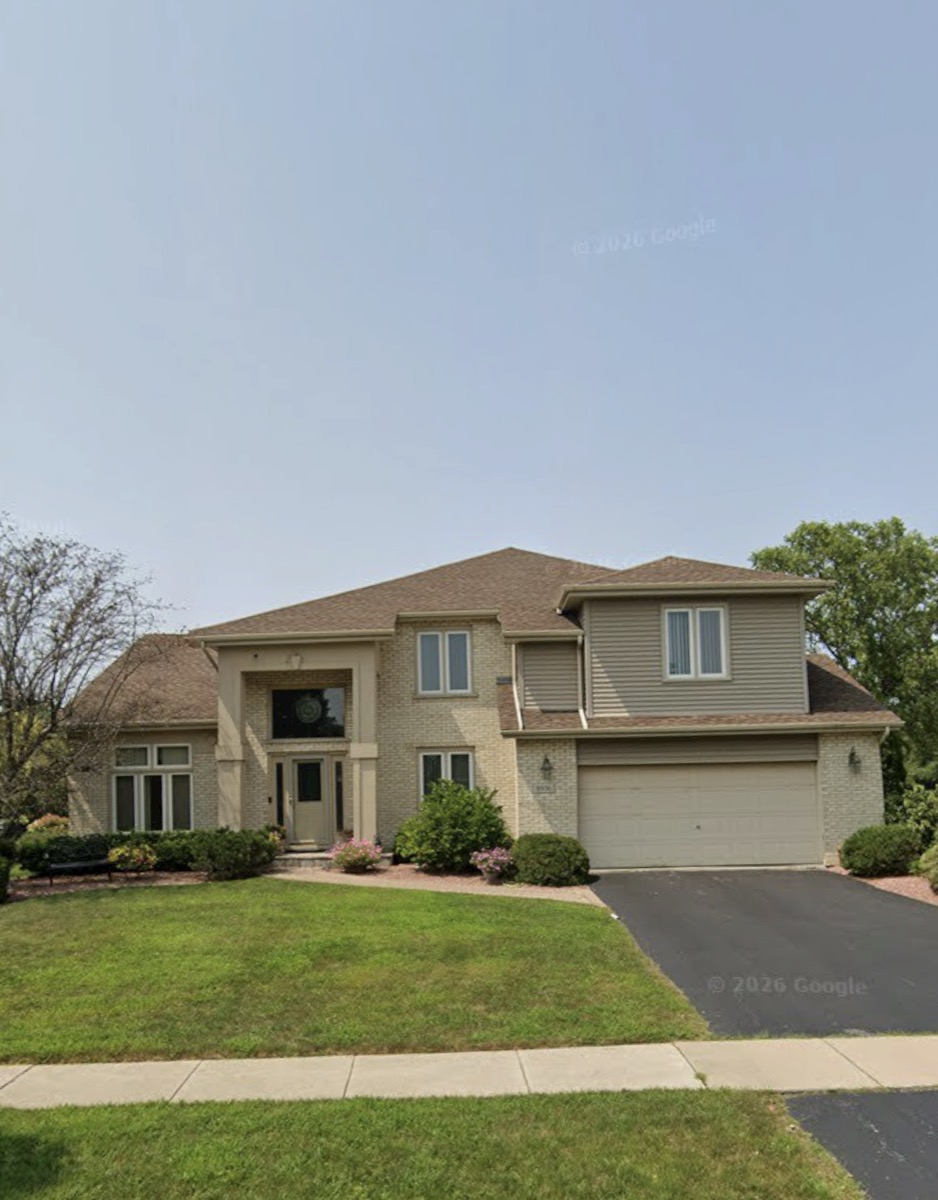

Sell Chicago Properties works with off-market, distressed, and creative-financing properties across SW Cook County and Will County, Illinois. Licensed Realtors may be used where listed dispositions require brokerage activity. Buyer-side work is handled under written agreements when applicable. Direct questions: contact page.
Decision brief for this topic
This page belongs to the Tax, Lien, and Title Problem Guides cluster. Use it with the calculator, glossary, and related guides so the next step is based on property facts instead of guesswork.
| Checkpoint | What to do |
|---|---|
| Before requesting access | Prepare proof of funds or lender letter, buying entity, repair tolerance, showing window, and professional-review questions. |
| Before writing | Check title posture, property condition, financing fit, repair budget, local events, weather, and exit strategy. |
| Next resource | Weather and events planner and buyer readiness calculator. |
Frequently Asked Questions
What should I send before requesting a property review?
Send the address, county, occupancy, timing, photos, known repairs, tax or lien information, payoff details, notices, and any title or court documents already available.
Can Sell Chicago Properties review a property as-is?
Yes. The review can start with the property facts available today. Offer feasibility depends on title, taxes, payoff, access, condition, occupancy, and closing timing.
Is this legal, tax, appraisal, lending, brokerage, or inspection advice?
No. These guides are general property-sale information. Sell Chicago Properties is investor-led and uses licensed professionals where a file requires legal, brokerage, title, tax, lending, appraisal, inspection, or environmental review.